
An encounter rather than an instructional film
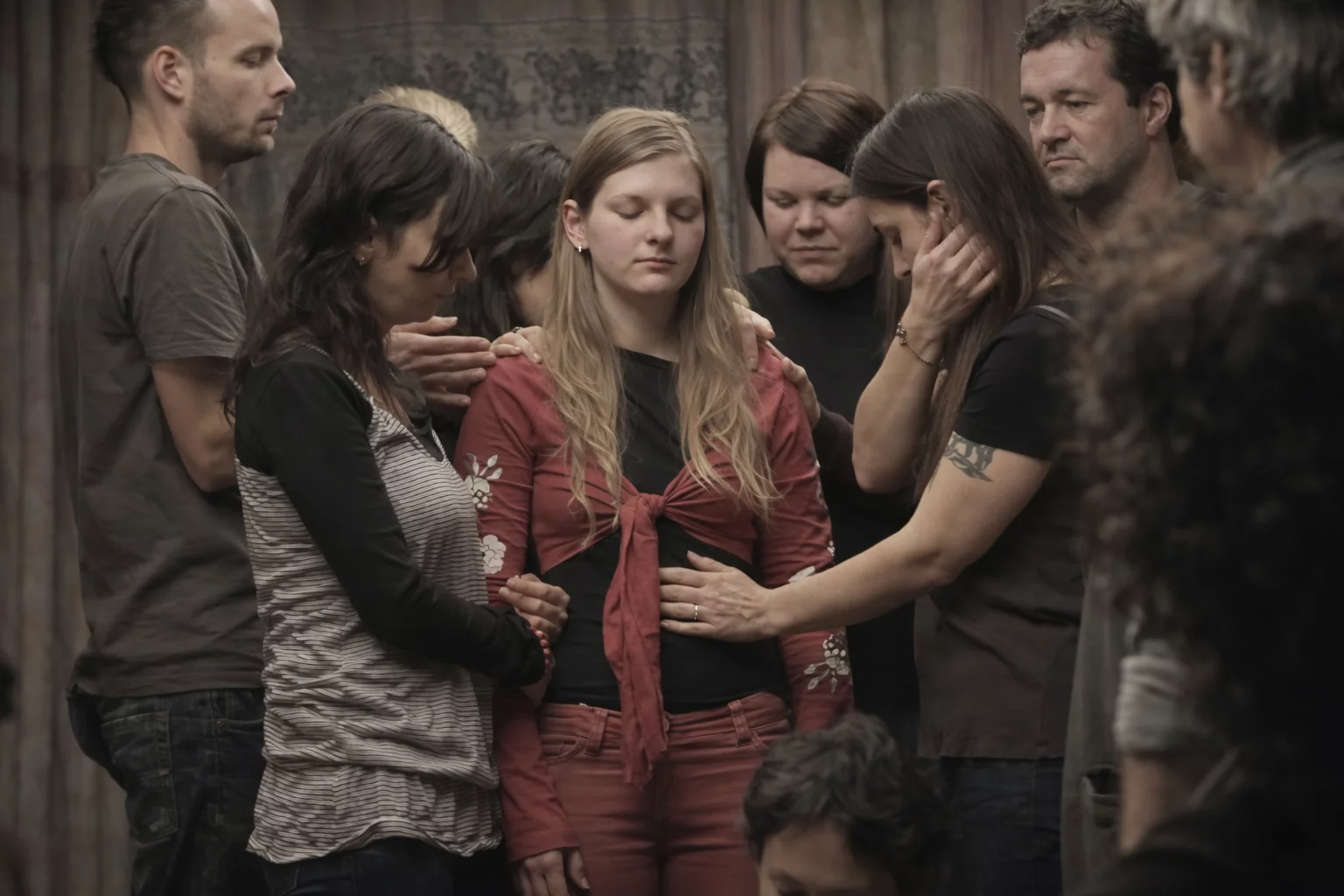
Kiki in the Group was János Xantus’s last film, shot in 2010. It grew out of psychodramatic work recorded with several cameras, but its intention was to convey the experience rather than provide a technical explanation of the method.
The power of the here and now
Psychodramatic action brings a past or imagined situation into the present. Editing and close-ups inevitably shape what the viewer sees, yet the risk and spontaneity of the process remain perceptible: the next sentence or movement is not fully predetermined.
The group as an active relational field
The film shows that psychodrama is not one person’s private story performed before others. Group members take roles, participate through attention and physical presence, and later connect through their own experiences. The protagonist’s story remains personal while also becoming shared.
Role, role reversal and perspective
By changing places, a participant may enter another person’s role and later look at their own scene from the outside. Role reversal is not mind-reading and does not prove what the other person felt. It loosens the idea that there is only one possible interpretation.
What does the camera do to an intimate space?
The film makes visible a process normally protected by confidentiality and a closed setting. Clear boundaries and consent are essential, but the camera is never neutral. The viewer also bears responsibility: the participants’ vulnerability calls for attentive observation rather than judgement.
What it shows – and what it cannot replace
The film brings us closer to the action, silence, group resonance and creation of new meaning. The viewer, however, does not become a group member and does not share the mutual responsibility of the process. The film opens a rare window onto psychodrama, but it cannot replace personal participation.